The wine tour that wasn’t

4th day in paradise.  My plan today was to rent a car and visit wineries.  Waiheke is packed with highly regarded wineries, none more so than Stonyridge.  They produce the world-class Larose, one of NZ’s top Bordeaux-style reds.  Most of the Larose vintages are sold out even before bottling (at $220/btl). I was looking forward to their tasting (and most of these wineries have excellent restaurants), as well as visiting several other wineries since they’re all nearby.

HOWEVER, it’s pouring rain outside and Ginger says she’s going to stay home and have a crash day after her ordeal yesterday.  If I know what’s good for me, I’ll stay home too and take care of her .

Sigh.  Oh well, the grapes were probably sour.

Coastal Hike

3rd day in paradise.  We decide to take a hike along the coast.  My NZ guidebook says “One of the island’s finest walks (2-3 hrs) which visits secluded beaches and windswept headlands ….”  Sounds good to me!  It visits 4 bays – Fossil Bay, Island Bay, Owhanake Bay and Matiatia Bay.  And pretty it is!

Now, pretty as those pictures are, we’re now heading toward 3 hours of up and down, we’re in the middle of nowhere, and Ginger is getting tired.  We have light, but like an hour or two.  There are two “bails” shown on our map that go up to a ridge road, but we’ve seen other trail offshoots that look like bails, we’re not quite sure where we are on the map, and that ridge road itself winds around quite a good distance before it gets us back to somewhere we can bus or taxi home.  It’s shorter, but it’s not short.  I convince Ginger she can do it, and to press on.  She agrees, but is not happy.  I would say grim.  The next section going down is really really steep, mud slippery, and on an edge.  It’s not too bad, really, but Ginger is not amused.  Then in looking at the map, she notices what it says about our trail (the map describes 10 separate trails on the island): “3 hours: access from wharf at low tide only.  A challenging route, with some steep, exposed and slippery sections ….”  So now she’s gone from “not happy” to “pissed”.  Somehow I’m at fault here.  She occasionally expresses displeasure.  Then at the base of that last picture’s headland (above) is a sign that says how far we are from the end: “3km (45 min); the last stretch impassible an hour either side of high tide.  Experienced trekkers only”.  Oooookay.  I’m thinking we’re pretty close to the other side of high tide; but how much?  But that is enough for Ginger, who looks tired, is a bit red in the face, and wants to kill me (luckily the cliffs are back a ways).  So off we go, goodness knows where, up a trail that may or not be the bail on our map.  It is steep.  I keep out of swinging distance.  Finally we get to the road.  It’s desolate, with occasional driveways disappearing into the forest.  We can at times see our destination on the other side of the ridge, but getting there?  The road goes parallel to it.  A couple cars pass, and I ask if we should flag one down.  Ginger doesn’t answer, but is either thinking about it or is planning to throw me under one.  Hey, why is this my fault?  Luckily we pass a lady walking her dog, and she shows us a driveway we passed that says “Private; do not enter; not a path to beach” and says “That’s a path to the beach, keep right”.  So off we go.  It’s not short, and it takes us back to the part of the trail along the beach that is impassible at high tide, but it is passable, and we limp to the end.  We just miss the bus, and it is an hour until the next one, but a local takes pity on us and drops us off in the little town near our apartment.  Whew!  We decide to celebrate our adventure and survival with a good meal and good wine.  View from restaurantPicture of the view from the restaurant is below.  Isn’t that nice?


From the looks of things, I’m still in the dog house.

Arrival NZ – Waiheke Island

We left Tacoma Washington for Auckland NZ on Saturday the 7th, arriving 18 hours later at 6:30am NZ time on the 9th (A day?  We lose a day?  Where does it go?  It’s gotta be lurking somewhere).  It’s a little weird to be writing this in sunshine on Sunday and knowing that it’s still daylight there in Cincinnati, only it’s Saturday.  So it sounds like I could buy the Wall Street Journal here on Tuesday and make a killing in the stock market there on Monday.  No?

As soon as we arrived in Auckland we left the airport for the wharf and took a ferry directly to Waiheke Island.  We’ll recover here for a few days (did I say they have some very good wineries here?  Like >20?  Waiheke is quite an attractive place – in spite of having their warmest winter ever, and no rain for like 5 months, the place is green, green, green.   And green with different flora than we’re used to seeing.  Lots of flowering stuff.  The pictures below are from the beach that’s at the base of the hill where we’re staying.  Nice!

2nd day in  paradise.  After sleeping for 12 hours we walked to 2 wineries a few miles away, up and down hills along a coast before turning inland.  Living on a coast certainly has an allure; there’s the rhythm of tides and breakers, a tranquility, dogs and owners walking on the sea strand, dog chasing the gulls … nice.

The many wineries on this island are apparently all boutique.  They sell everything they produce, and prices are high – they start at $30.  One of the two wineries was amazing – MudBrick Winery.  They own 15 acres and produce something like 15 wines, for a grand total of 4,000 cases.  We tasted 10 wines, bottle cost $30 – $50, and they are worth every penny.  Yummy!  I’m really going to like NZ!  I asked if they export at all, and they said yes – they send 40 cases to Auckland (35 minutes away).  Below is a picture of their vines, protected from the wind by those hedges at the top of the hill.  Wind here can be fierce.  We also got an interesting tutorial in our wine tasting; the hills produce quite different microclimates, and the wines from the same grapes just a km away were quite different.

Speaking of prices, we are shocked at the high cost of living here.  Auckland, NZ’s largest city, is known to be expensive, and here on the island everything has to be ferried over, but still!  A decent simple house is $500,000, with a view $750,000, and an actually nice house is well over 1 mil.  Asparagus is $1 a stalk.  Pasta is $14 a box.  Bananas are $2.25 a lb.  Everything is at least twice the cost in the US.  Lunch for 1 (crab omelet, coffee) is $25.  We quickly decided to do dinners here in our room (seems like most hotel/rooms come with an efficiency kitchen).  We’re hoping things settle down once we leave the Auckland area!

The landscape here is really interesting!  It’s sub-tropical, so all those fascinating plants you see in nurseries there in the US are growing wild here.  It’s kind of like walking through Cincinnati’s Conservatory.  On the hillsides no tree type is dominant, so there is an incredible mix of tree ferns, palm trees, evergreens and deciduous trees creating a multi-hued quilt of green (and white, it’s spring).  The trees themselves look like they were designed by Dr. Seuss.  Tree ferns are 20 feet tall.  Some flowers are recognizable house plants, others just strange.  Pictures below:

The birds we see are typically large and interesting, with very beautiful calls.  I’ll be showing  you pictures of birds – NZ has unusual ones; the islands originally had no mammal predators like rats or possums or foxes, so birds evolved to fill the niches that mammals usually inhabit.   That gave rise to, for instance, the flightless kiwi bird that feeds at night …. The birds took a beating when mammals were introduced (Kiwis [the people] hate possums), but predator-eradication programs have created sanctuaries on islands and other regions where these birds now do well.  There are two birds below: we don’t know their names yet.

I almost forgot to mention what I think is a somewhat wacky sense of humor in the official NZ world.  For instance the duck crossing sign?  Also an official sign for parking at the wharf, that says “Parking”, next line “48 Hours”, next line “2880 Minutes”.  Duck crossing

All for now, more adventure tomorrow.

Sevilla City

Well, let’s start off with the view of the Giralda tower from our hotel roof.  ViewHotelIt’s a pretty sight.  Sevilla was Spain’s largest and richest city in the 1600’s, and today is still its 4th largest city.   So it is big and bustling, with the advantage of the old center being a mayor tourist destination.  The architecture of everyday houses is fascinating, along with the amazing Spanish ironwork which is truly everywhere.

Sevilla’s architectural history is scattered about – The Torro del Oro (gold tower – it was originally covered in gold tiles) is Moorish from the 1200’s and was part of the city’s fortifications (pictures below).  Note the locks on the door – these monstrous locks (with their equally humongous key holes) can be seen on many ancient doors throughout Spain).  At the Plaza de Espana, the Spanish pavilion from the 1929 world’s fair, everything is a tile; quite impressive.  And frequently one can find Rome’s impact, such as these incorporated portals (partially buried by two centuries of dirt, but just right for today).

SidewalksOne of the interesting adaptations of Spain is their shopping; they don’t have malls as we know them, although small ones do exist (often as food markets).  Shops are mostly small stores on the streets.  Well, in the summer it is HOT!  Temperatures were often over 100 degrees when we were there (you can’t get further south and still be in Europe).  So the solution?  The solution in the barrios from a century ago was to build really narrow streets; with buildings so close together, there is a lot of shade.  And later?  The solution is to put awnings over the street from the tops of the buildings, shading the streets.  It works quite well.

And perhaps I should mention food?  Tapas are believed to have originated in Sevilla, and although we were not blown away by the fare other than the jamon (really good aged, cured ham), the ambiance is great.  Most of the time eating is done outside in the cool of the evening (dinner starts at 9pm), and it is delightful.  That last picture is from one of the Starbucks in Sevilla.  Starbucks is everywhere, and I think you will see that it is better than in the US – many more choices!

All for now!  Next is the Alhambra.  Oh my!

Sevilla and its Cathedral

In the 1500’s Sevilla was a gateway to the world with its river harbor; Magellan sailed from here. In the 1600’s Sevilla was Spain’s largest and richest city. Today it is a tourist mecca, famous for it’s cathedral and Alcazar (palace),and equally for its “soul”: the flamenco dance, bar life, and maze-like Jewish quarter.

Any picture of Sevilla should start with a view of the Giralda tower, originally a minaret, built in the late 1100’s and now the bell tower for the Santa Maria Cathedral of Sevilla. Actually, the tower couldn’t be supported by the Moorish brick, so the Moors used Roman stone for the base. And the Catholics added the top bell tower. Note contrasting styles!

The cathedral itself is fascinating.  Some walls and doors still remain from the original mosque, but not much.  The contrast between the old mosque and “new” church is shown in the pictures below (taken from postcards, the mosque an artist’s conception).

Note the simplicity of the mosque, and its relatively modest human scale; vs the much more vertical, elaborate and complex cathedral.  One can see that complexity viewed from above;  from the outside, the cathedral is so large I found it impossible to SantaMaria1comprehend its overall structure.  It is the 3rd largest church in Europe, and the largest Gothic church.

Note from the postcard pictures that the inner courtyard of the mosque was preserved – as was the entrance gate, a gorgeous bronze-coated door saved from the mosque (early 1200’s) as shown below.

Inside, the cathedral is magnificently (and confusingly) large.  It goes forever, but there are large structures inside – a choir, a high alter (the largest ever made) –  that subdivide the space and work against awe. As seen below, it’s impressive and intriguing, but not elegant.

The cathedral has some nice stained glass.

Columbus tomb, bronzeOh, and by the way, Columbus’s tomb is here.  Impressively so.  The tomb is carried by 4 Spanish kings, life-size,  and is made of gorgeous bronze.  It is spectacular.


Mary, Rescued FrescoSpectacular in a different way is an incredibly beautiful fresco, painted into a prayer niche of the mosque after the Christian conquest in 1248 (the mosque was used as a church until they tore it down to build the cathedral).  The builders were captivated and saved the fresco for us to enjoy.  Artist unknown.


But where the cathedral shines is its riches.  Oh yeah!  Let’s forget the incredible marble and carved choir and gold gilding (below)

and hundreds of body parts common to many of these churches.  We’re talking  major flaunt here.  How about a Goya painting?  Or among the many many many gold and silver crosses and boxes, this crown?  It has 11,000 precious stones and the world’s largest pearl (angel’s silver torso, right).

SMGoyaCrown

The other major attraction in Sevilla is the Alcazar.  Next post!

Malaga, Costa del Sol

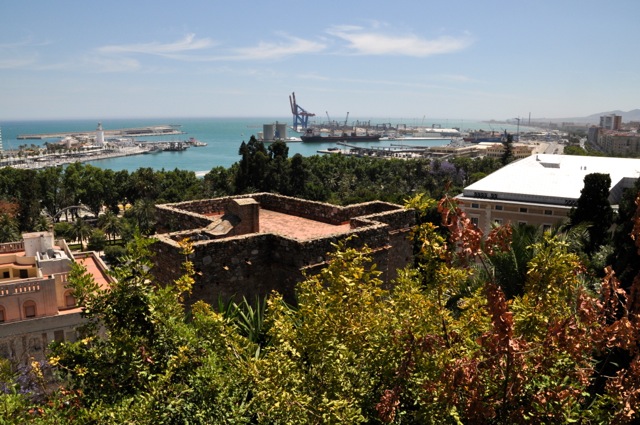
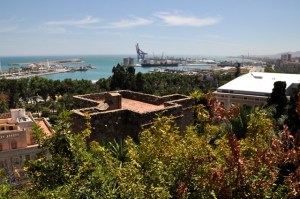
Malaga overview (from the Alcazaba)Málaga is a Mediterranean port city with about 3,000 years of history, starting with the  Phoenicians in BC 800.  Followed by the Carthaginians, followed by the Romans, followed by the Moors, and followed by the Christians.  As you might imagine, there is history to see here; maybe not grand sights – Málaga is not on the tourist trail (not even mentioned in Rick Steve’s travel book) – but it does have some impressive sights, made even more enjoyable because it isn’t on the tourist trail (it’s real), and there are no crowds to fight.

Before I show you around Málaga, let me entertain you with our first adventure.  Málaga is also where the planes land if you’re going to the Costa del Sol, which is why we’re here – we’ve just arrived from the US, it’s the late afternoon, and we’re slightly stressed out.  Stressed not only from lack of sleep, but just now concerned about our inexpensive hotel.  The streets are narrow in Málaga, and many streets can not accommodate cars – like, as we discover, our hotel street.  The taxi stops in front of an intersecting alley, and informs us the hotel entrance opens into it – somewhere.  It’s far enough up that we can’t see it.  Oh yeah?  Kind of an inauspicious start.  Whatcha bet there’s no doorman either.  We nervously shoulder our backpacks – all our belongs in this world – and start up this looong and narrow, darkish, not-quite deserted alley.  Ginger is a little nervous.  Glad it’s still daylight.

Well, the room is not so bad.  It’s clean and simple, and will do fine while we crash.  First things first, I try to plug the computer into the Spanish outlet, and discovered that the really cool TUMI multi-prong all-of-Europe converter I bought is not grounded – meaning the converter has only two holes to plug a device into, and the Apple computer cord is three prong.  Yeah, that’s a problem; why didn’t I notice that before?  Stores are open until 9pm, so I go out to find some sort of converter, and to buy a phone for me and a SIM card for Ginger’s iPhone.  Well, no luck with a converter, but a phone store said to come back the next day and all will be good.  I think.  Did I say that no one speaks English in the stores, and I learned my Spanish from a book?

The next morning before check-out I hot-foot it to the phone store.  The salesman opens Ginger’s iPhone to put in the SIM card, announces that it takes a “nano-SIM”, and that all of Spain does not have this for prepaid cards.  Only for phones with contracts.  (This info, of course, is in Spanish).  OK, so I’ll buy a damn contract for a year.  Problem solved.  No, the contract can only be set up with a bank account where the money will be automatically withdrawn.  Jeesh!  So I’ll open a damn bank account and put in enough money for the contract.  So I find a bank, which also doesn’t speak English.  I learn I can’t open an account because I need an address in Spain to do this.  So now I have to buy a house to get a SIM card!!  Clearly this is spinning out of control and we need to find an Apple store.  The hotel helps us, and we get the address – across town, of course.  Well, surprise on surprise!  The address is a department store!  A big one, too.  After wandering for awhile we find Apple – just an open floor space in the store – operated by a single person!  Apple?  There are two people ahead of us, and after waiting for an hour we successfully get a cord for the computer and, nearby, a phone store with the right nanocard (there is a company in Spain that does this).  Good to go!

In spite of the bumpy start, Málaga looked interesting; and so after a week in Costa del Sol we returned to Málaga for a few days.  It’s delightful!  It has a Roman amphitheater, a Moorish palace/fortress Alcazaba, a castle, a cathedral, and it’s where Pablo Picasso was born, with a museum devoted to his work (he personally donated much of the art).
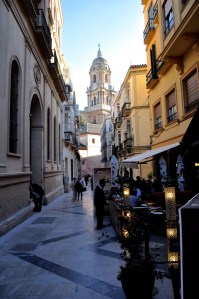
The marble streets and delightful atmosphere of MalagaOkay, finally I’m going to show you around Málaga!  Although it’s a city with a population north of half a million, at least in the downtown historical area it has all the feel of a much smaller place.  Let me start by showing you, on the left, a typical view of one of Málaga’s streets.  We’re just north of the central business district.  Charming, yes?  It’s not quite streets of gold, but did you notice that the street/sidewalk (too narrow for a car) is all marble?  Beautiful marble?  As are most of the streets/sidewalks of downtown.  We’re impressed!  For us, it’s the defining characteristic of this interesting city.

Want to be more impressed?  Let me show you the downtown main shopping street, daytime and nighttime.

It’s so spectacular, it looks staged, doesn’t it?  Airbrushed?  Nope.  I took those pictures.  View from our hotel windowThat’s the way it looks.  Our hotel that we’re splurging on, by the way, is just off-camera to the right of that shopping street above.   The picture to the left is a view of the adjacent small plaza from our bedroom window.  And yes, the streets – and plazas – are all marble!

The city has a lot of good, inexpensive restaurants like the one in the first picture below; their “berenjena con miel” (eggplant with honey) is by itself worth the trip to Málaga.  There is also a very entertaining street scene; the guy suspended in the air had me quite befuddled for awhile!

Street artThe city also has a whimsical side, such as this art just hanging between buildings for no apparent reason.

I mentioned the Picasso museum, which was quite enjoyable, but taking photos was not permitted.  Most of the art was his early work, when he actually drew things that looked like what they really look like.  He was indeed a talented artist in the conventional sense; one does not always know that from his famous ground-breaking art.

I mentioned the Phoenicians earlier.  When the city digs a foundation for new buildings, they sometimes encounter old Phoenician walls and such, which are preserved; examples are shown below, discovered when the city was building the Picasso museum.

After the Phoenicians came the conquering Romans, who built an impressive amphitheater into the hillside.  It was built about AD 0, during emperor Augustus’ rule

right after the death of Julius Caesar.  The fortress wall above the amphitheater in the left picture above belongs to the Moorish Alcazaba – we’ll get to that.  The foreground in the right picture shows what remains of the amphitheater’s stage building.  This impressive amphitheater is located right next to the shopping district, with no particular fanfare.  Pretty cool.
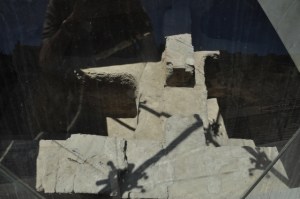
Salting basins for the production of garum, from AD 300'sMy apologies for this picture – too much contrast, too much reflection from the glass – but I thought it was cool.  It’s close to the amphitheater, and shows 4 separate salting basins that the Romans used in the making of garum, a fish sauce made from a base of sardines and anchovies, and highly prized in the AD 300’s.  There are a number of these in Málaga, usually residing in basements (unearthed when building foundations).

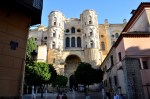
I’d show you the the mosque from Moorish times, but when Málaga was reconquered by the Catholics in 1487, it was razed to build La Catedral de la Encarnación (you, citizen, are not Muslim anymore).  Started in the early 1500’s, the cathedral was finished in the 1700’s.  It is impressive, as shown below.

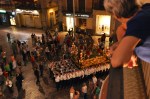
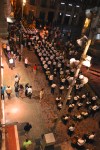
Speaking of Catholics, we’re in our bedroom when we hear increasing noise – a parade! – just outside.  Sure enough, a procession turns the corner and comes right past our window.  A marching band is playing in the distance, lots of drums, and marching past are priests and people ambling slowly along.  And then, rounding the corner, comes the church’s monstrance (Roman Catholic: large ornate piece containing the Heavenly Host).

It is taking 100 mostly young men to carry it, slowly and very carefully; a human millipede.  It does not look comfortable!  For reasons unknown they stop right outside our window, and we get a great look.  Then the band and they start up again, everybody perfectly in slow step, arms swinging in sync.  Clearly if one person falls, bad things could happen, and this must be well-rehersed.  Pretty cool!

I’ve been saving the best for last – Málaga’s Alcazaba.  It’s out of temporal sequence in this blog: it should have been presented before the Catholic cathedral.  After conquering Spain in the early 700’s, the Moors ruled Málaga for nearly 800 years.  The governor’s home, the Alcazaba, is part palace but mostly a fortress based on the best defensive theory of the day.  In the first picture of the amphitheater above, you can see a section of its surrounding wall.  Actually it has two concentric walls, as can be seen in the models below.

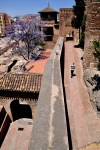
If you wanted to attack, other than storming the fortress over the two walls (and uphill), you had to enter via the front door.  To make that access difficult (in addition to uphill), the entry path consisted of long, exposed back-and-forth paths connected by tight enclosed 90º or 180º turns to restrict the number of people passing through at one time.  And of course there are extensive vantage points to shoot down at the poor souls on the path.  Please, Mr. Custer!  We’ll walk up the paths so you can see this, as shown below.

We exit from that last tower/entrance to a very attractive garden (shown below).  Oh – and if you look around a bit – the 2nd set of walls!  We’ve just made it to outside the palace walls.  There are more fortifications to navigate!  And of course there are yet more

defensible gates (below), and the route has two exposed 90º turns.  Finally we

come to the palace.

Well, after seeing the palace at Sevilla, this isn’t so impressive!  Of course, Sevilla is an incredibly high bar to best.  Although the “palace” here has Moorish arches and fragments of delicate plasterwork, View of the Mediterranean from the Alcazabait’s not well preserved, and it’s hard to visualize what was really here 600 years before the Catholic Reconquista.  Even as it is, however, we could see living here in AD 1000 with a great view of the Mediterranean!
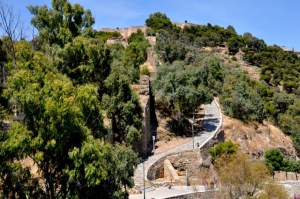
Although the fortress was designed to be impregnable, technology has a way of thwarting plans; the arrival of gunpowder and artillery needed a response, and so in the 1300’s a castle (Castillo de Gibralfaro) was built to defend the Alcazaba!  Unfortunately we never made it there, although here is a picture of its walls from the Alcazaba.Walls of Castillo de Gibralfaro
 

Well, hope you enjoyed this visit to Málaga, a delightful city off the tourist path.

Next stop is the highlight of our Spanish trip – Cordoba.

Andalucia, Moorish History and Architecture

This is about Sevilla. However, I think this entire Andalucian region needs some introduction. So this is going to be long, and talk about history with my novice understanding, so skip to the next section if you don’t want context.

Sevilla was fascinating, especially the Alcazar. Unlike the U.S., there is an enormous strong link between history and the architecture one sees. Especially in Andalucia, where the Muslim and Christian cultures fought so hard during the (400 year long) “Reconquista”. Let this non-historian give you some non-studied history, not because I have any unique insight, but simply because this history/architecture link hits you between the eyes, and can’t be ignored. First came the Phoenicians, for which not much remains, mostly stone walls, and that visible only from excavations – usually inside a building and below ground. We’re talking 6th century BC. Digging foundations for a new building here usually means a delay for an archeological investigation, and the middle of a hotel’s dining room can have a fenced-off section of Phoenician walls. Then came the pagan/Christian Romans, and their visible stone foundations are often a part of the “newer” buildings – not to mention the occasional amphitheater or remaining vertical columns of a temple – or their architectural influences. Then came the Visigoths in the late 300’s, and they were Christian and did more destruction than building, apparently. It would appear to this pagan that the primary usefulness of Visigoths in this region of Spain is that of a foil for the Catholic church to argue that Moorish structures are a temporary aberration in time and less important with less rights than the continuous development of Christianity. History here seems to be physical and real with issues somewhat similar to water rights in the American Southwest. A Catholic church that has Moorish parts runs into discussions when alterations are desired.

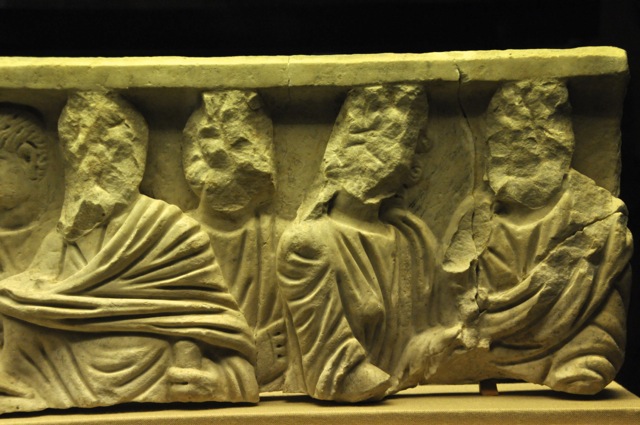
Anyway, back to my story. The Visigoths were nomadic and small-village people, and when the Moors swept in from Africa there was not much resistance. Coming from Africa, the Moors were enthralled by all the water they found; and on the Roman foundations they built incredibly beautiful – let me repeat, incredibly beautiful – structures. After, of course, leveling facesChristian churches and knocking the faces off sculptures of humans since the Koran doesn’t like that. And the Koran says to wash up before entering a city or church, so water was piped to plentiful public and private baths, as well as patios and fountains and gardens. And the spaces, decorated without depicting animals or people, are very geometric and intricate, seldom repeating, and are everywhere, providing a jaw-dropping feast for the eyes and a tranquility for the soul.

The Moors came to this region of Spain in the 700’s or earlier, where much of the architecture we see was begun. Moorish kings got really wealthy with trade between Africa and Europe (and their own silk business) and built fabulous palaces (and needed fortresses). A lot of this really beautiful stuff was built between the 1200’s and 1400’s. So we’re talking about use and re-use for 500 years or longer, without much sprawl (being close to the fortress had some advantages for survival). If you’re doing any historical restoration, it’s hard to know at what time point you want to go back to. Anyway, as Europe trudged through the Dark Ages, Moorish magnificence and intellectual thought bloomed. And it’s still here to see!

And then came the Reconquista, and Christian Spain North got united (with Austria) and began reclaiming the peninsula. It was slow going for 400 years! As Muslim city after city fell, the victorious Christians, having lost many lives, wanted to make a statement to remaining residents, and typically leveled the mosques and built YOU’RE CHRISTIAN NOW! churches that are pretty in-your-face. Except where the Moorish mosques were so incredibly beautiful that they couldn’t in their hearts tear it down. So some of it is preserved. In Cordoba they built this humoungous Catholic church smack in the middle of the mosque, preserving a bunch of the mosque, but we’ll get to that in another posting. What one sees today is a striking juxtaposition of this beautiful Moorish poetry in architecture, with typically bombastic Catholic architecture that took a hundred years to build (thus incorporating all the successive architecture in vogue, Gothic to Renaissance to finishing touches in Baroque), gilded in gold, big and ostentatious.

Today what one sees is remnants of the Moorish world starting from 900 or so, the older stuff typically walls, Moorish baths, and water-delivery systems (see Ronda), with that same or nearby space occupied by a subsequently flourishing Muslim world until the late 1400’s (and amazing parts of that world of the 1200-1400’s still preserved). Let me show you some of them in subsequent posts!

Arcos de la Frontera

Arcos is, like Ronda, another of those picturesque white-washed hill towns perched strategically on cliffs as a defense against the Catholic Reconquista that went on for 400 years, town by town slowly falling (the name is “… on the frontier”.)

We thought Arcos was a little disappointing.  It played a role in Moorish history by being hard to conquer, but it has a lot less to offer than Ronda in terms of natural beauty.  And it’s small.  We did stay in a Parador hotel; the Paradors are luxury accommodations in historical buildings – palaces, castles, convents, monasteries – that have been converted into hotels but maintained by the Spanish government. They are typically located in smaller medieval towns.  This one is relatively inexpensive.  The one in Grenada is a renovated convent within the Alhambra and is like $400 a night (we’ll pass).

These are from our hotel.

 HotelArco  ViewFromRoomHotelArco2
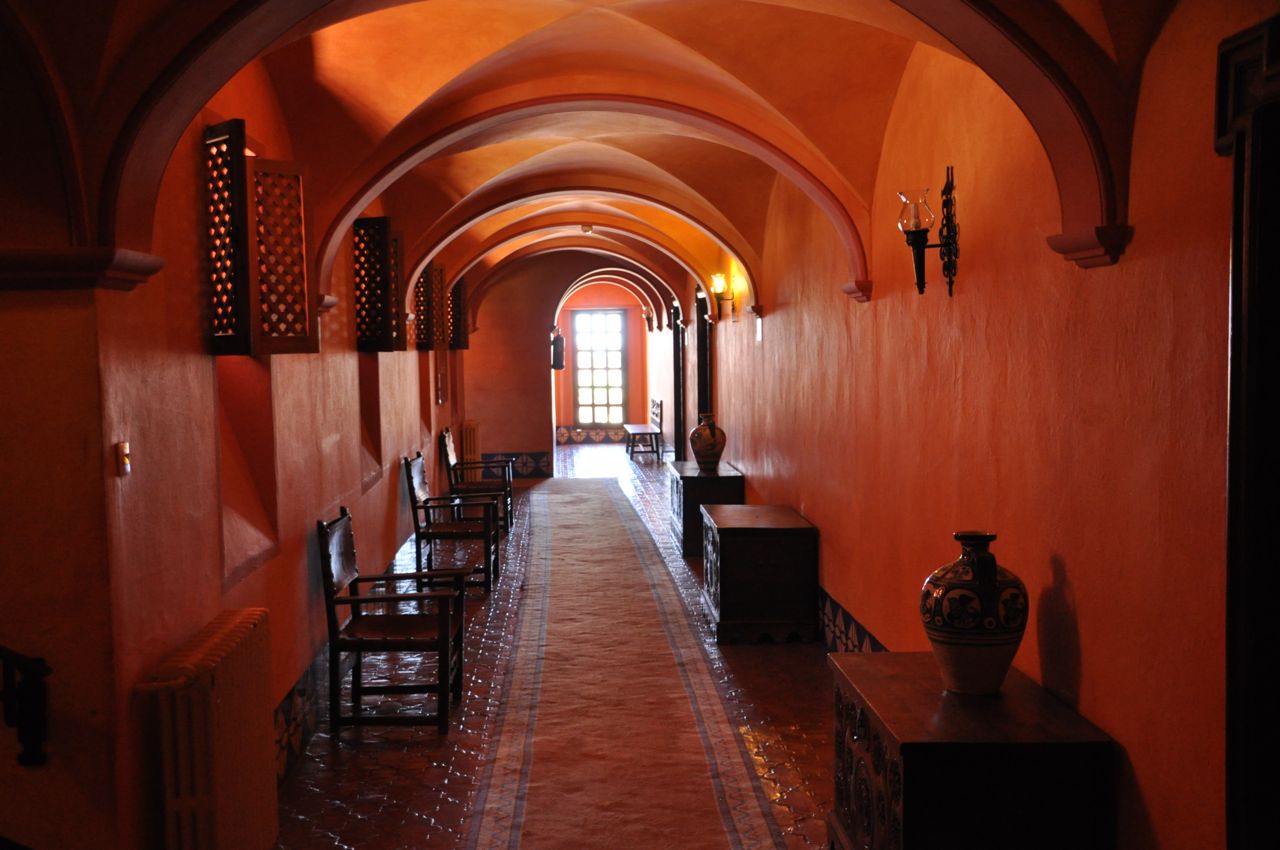
The small patio                                  View from the room                             Hallway to room
ViewFromTerrace ArcoFromHotel
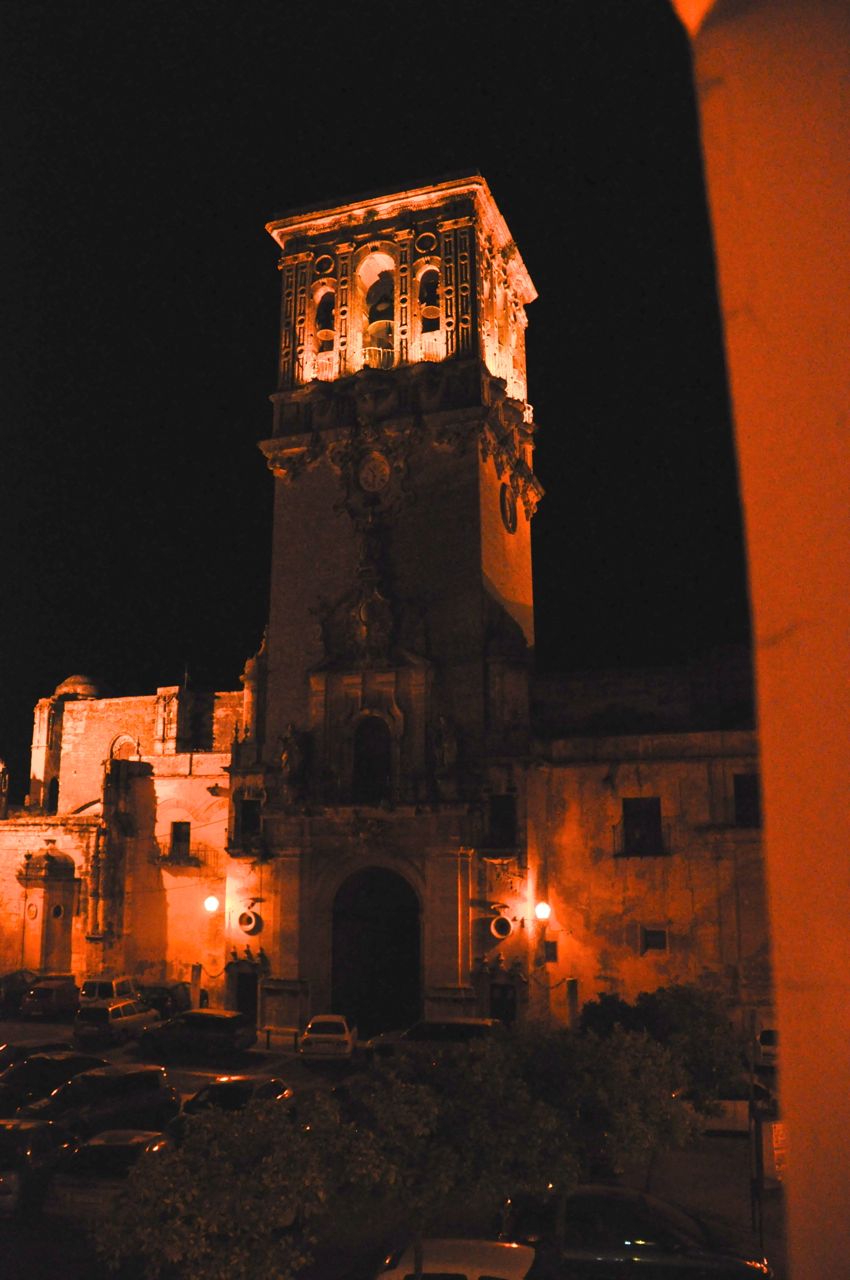
Views of another church from the terrace, and an appreciation of why Arco was easy to defend.

ExorcistCircleThe picture of Ginger in front of the church – she is standing in an exorcist circle (red and white stones, 15th century).  Prior to baptism, the child was brought to the local exorcist for cleansing.

Arco

Pretty – and pretty narrow – medieval streets throughout town.  Actually, this is like most towns in the barrios of Andalucia.

Sunflowers DSC_0410

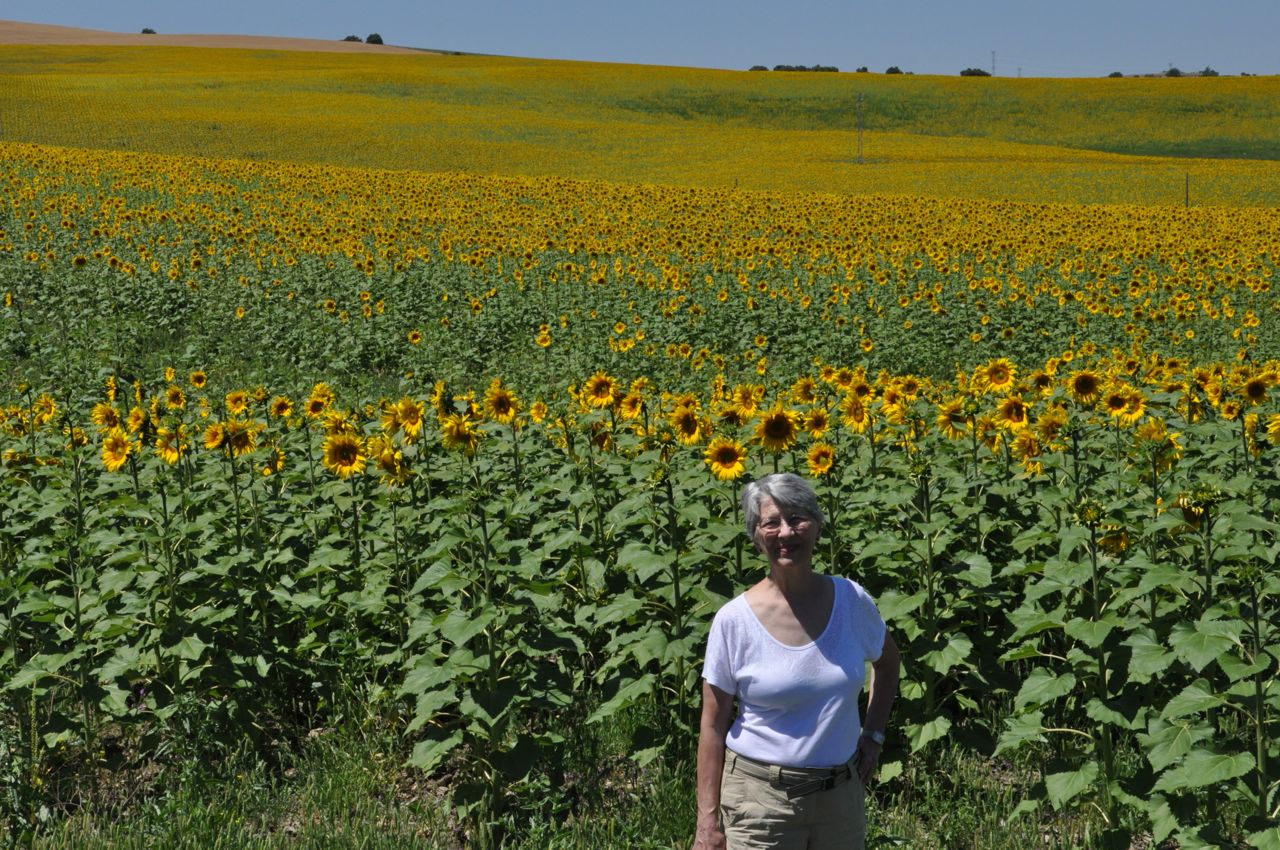
This part of Spain – Andalucia – appears to be very agricultural.    And prettily so.  The wheat fields go on forever across the undulating landscape, as do the olive trees.  The olive trees are amazing, going from horizon to horizon, often in neat rows. Olives are big business here; anytime you sit down for a beer or wine, out comes a dish of (green) olives.

Sevilla – Getting There

We continue to have difficulties with the newer technologies of the Garmin and iPhone.  Now I confess that Ginger is the operator of the Garmin and owner of the iPhone, but I doubt I would do any better.  Neither of us have had much time to play with them!  Our Garmin asks first for the street we want, and then searches for every street in Europe by that name.  We then scroll through thousands of hits for the one in the city that we want.  Strange.  It also tends to turn itself off somewhere in the middle of the drive; the little lady inside goes to sleep for some reason.  The last episode was a real disaster.  I bought an adapter for the car that pushes into the auxiliary power hole; then the Garmin taps into that with a USB connector.  So using it into Jerez, it kept telling us to turn right when we knew that was wrong (wrong input address?) so we ignored it and got to where we wanted.  Then on the way to Sevilla (same day) it was working great, until we got to the outskirts of Sevilla when it died from lack of power – while plugged into the car battery!  Not sure if  the problem is the car or the auxiliary power adapter or some combination (I bet the new adapter).  Anyway, just when we needed it the most, it was useless.  Ginger has an iPhone (Google Maps), but the previous day it went into a non-working “no service” mode.  And did I say we didn’t have a map of Sevilla?  Our Michelin map didn’t show a city blow up.  And did I say that our hotel was in the barrio of Sevilla with medieval tiny winding streets, all of them seemingly one-way the wrong way? I had written street-by-street instructions to the hotel on a small piece of paper (not trusting the Garmin completely yet), but it turns out the street names are not on many corners, the names change over short distances, and Ginger can’t always read my writing.  So getting on the major loop around Sevilla, (I’m the driver, Ginger is the navigator) Ginger says we’re looking for exit 813 (earlier we had seen a sign for 803) but after driving awhile we couldn’t find anything remotely close to 813.  When I stop to look at the notes, I notice that we’re NOT looking for exit 813, my handwriting says exit 8B; that misleading 803 number that we had seen was a road name, not exit number.  Well, then things really got bad when we hit the barrio.  One-way streets are everywhere.  And worse, they’re one-way for a reason!  We’re talking medieval here, designed for horses.  Skinny poorly fed horses at that.  Heck, in some spots two horses couldn’t pass.  Maybe if they inhaled hard.  My notes take me through horrendously tortuous and narrow streets (I’m sweating bullets; this is a rented car, and my mirrors are inches away from scratches, and there are right angle turns that look impossible); and then we’re nowhere known, and by mistake I drive over a plaza where there is no street (no one seems to care, his must happen a lot), and we’re totally lost but no worry, there are no options, only one-way streets.  Travel on.  Finally we come to an intersection – a busy one, 4 lanes! – and lo, we are back on the street we had started from, some roundabouts earlier.  And did I tell you that on the regular streets there are roundabouts with 4 lanes going into 3 lanes on the roundabout and then 2 lanes on the out-road with cars jockeying for position along with motor cycles buzzing in and out while we’re looking for street names?  Nothing is easy.  So back into the barrio we go; same problem, so I called the hotel (the operator doesn’t speak English well) and we are told to take this street and that (the last one we can’t find).  So we loop again, and call again, and after answering, our operator lifeline puts us on hold.  Well, I’m in a one-way street with a foot on each side of me between stone houses, and cars piling up behind me, so waiting is not a good option!  So I turn into a (wrong) street, blocking it but nobody behind me, and ask directions.  Bingo!  I’m a street away, and just need to make a left (actually, that’s squeeze a left) and I’m there.

Car  HotelStreet

Above are two pictures of the road to the hotel.  Don’t think this is the worst of the streets!  Many are this small at some point.   The pictures show the road and a sidewalk on each side.  Both the roads and the sidewalks vary in width – small and smaller.  On the smaller ones like this, when a car comes (which they do often), one has to duck into a shop’s doorway.

Learning: do not book a hotel in the barrio.

We parked our car in a separate tiny tiny garage under a house, holding about 5 cars.  After going down a ramp and turning 90 degrees right, one could only back into the allotted space.  Getting out, however, seemed much harder.  Did I tell you the cement ramp was like 60 degrees up?  Seriously.  Attached to the wall on one side and totally open on the other.  So one had to negotiate that 90 degree left turn, turning hard so as to not hit the right rear view mirror on the wall, goose the engine like crazy to get up the ramp (standard shift, clutch), while sweating bullets that the left rear tire would not fall off the ramp edge as you made the turn.  That would be bad.  Then up the ramp one could not make the turn into the one-way street, so you had to go the wrong way to a nearby y-intersection and see-saw back and forth until the car could turn around, again risking mirrors against walls.  Tough!

Learning:  Public transportation is looking better and better!

Ronda – our first stop

Below are some pictures from our first stop in Ronda, Spain.  Interesting place, and we lucked into a festival.

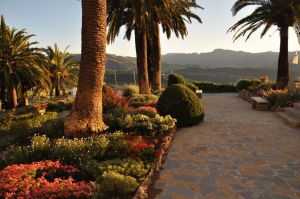
View from our hotel:  It’s quite a beautiful place, with a commanding view of the gorgeous Tuscan-like countryside, visible from almost everywhere in the hotel – like our balcony.

OurHotel1

OurHotel2

Local market – she’s cooking different kinds of sausages for you, served with a plate of potato chips.  Say what?  Also a shot of the bread guy.

DSC_0073 Market

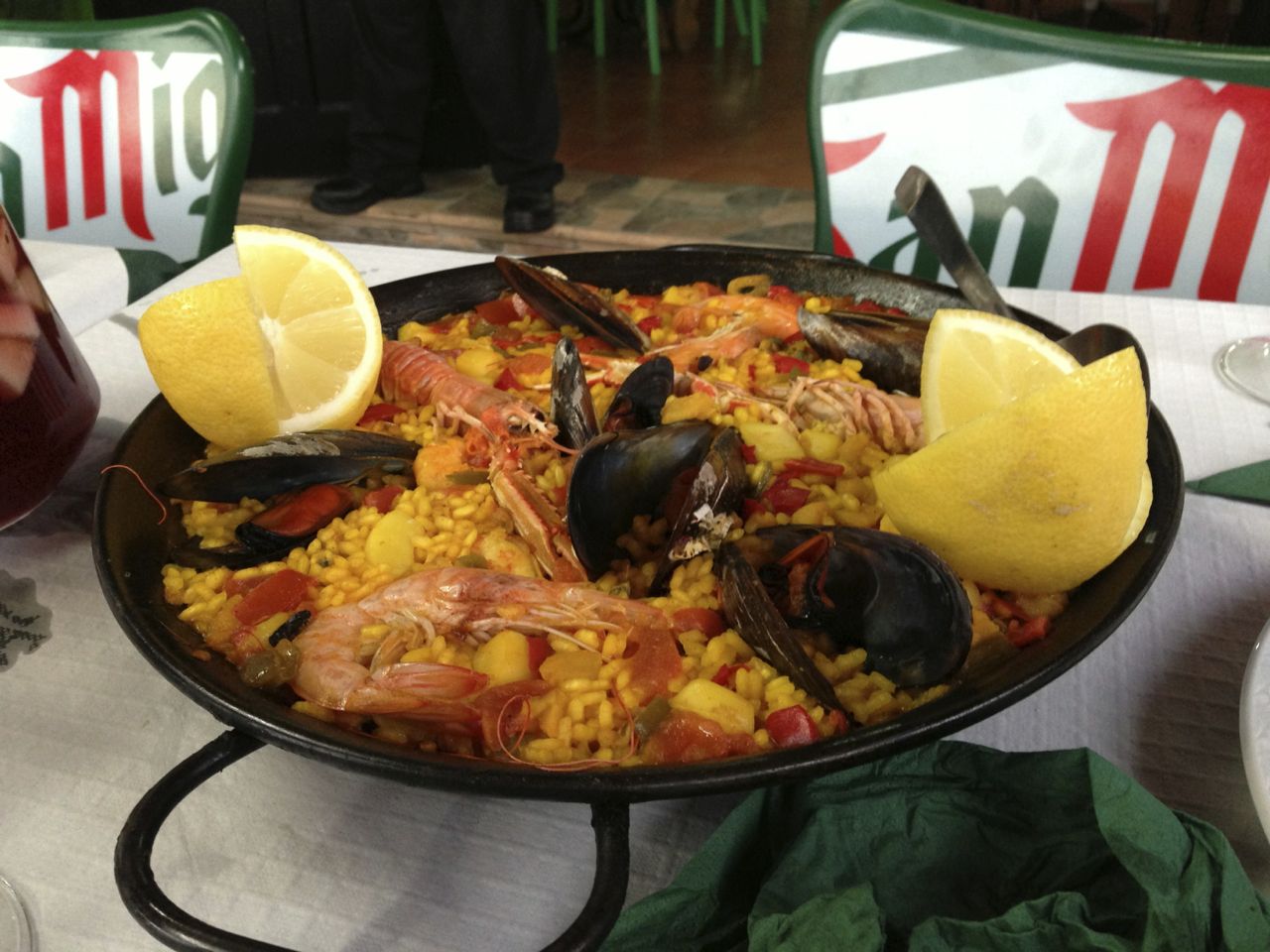
At restFood2aurants: local fried squid, and paella.     Food1

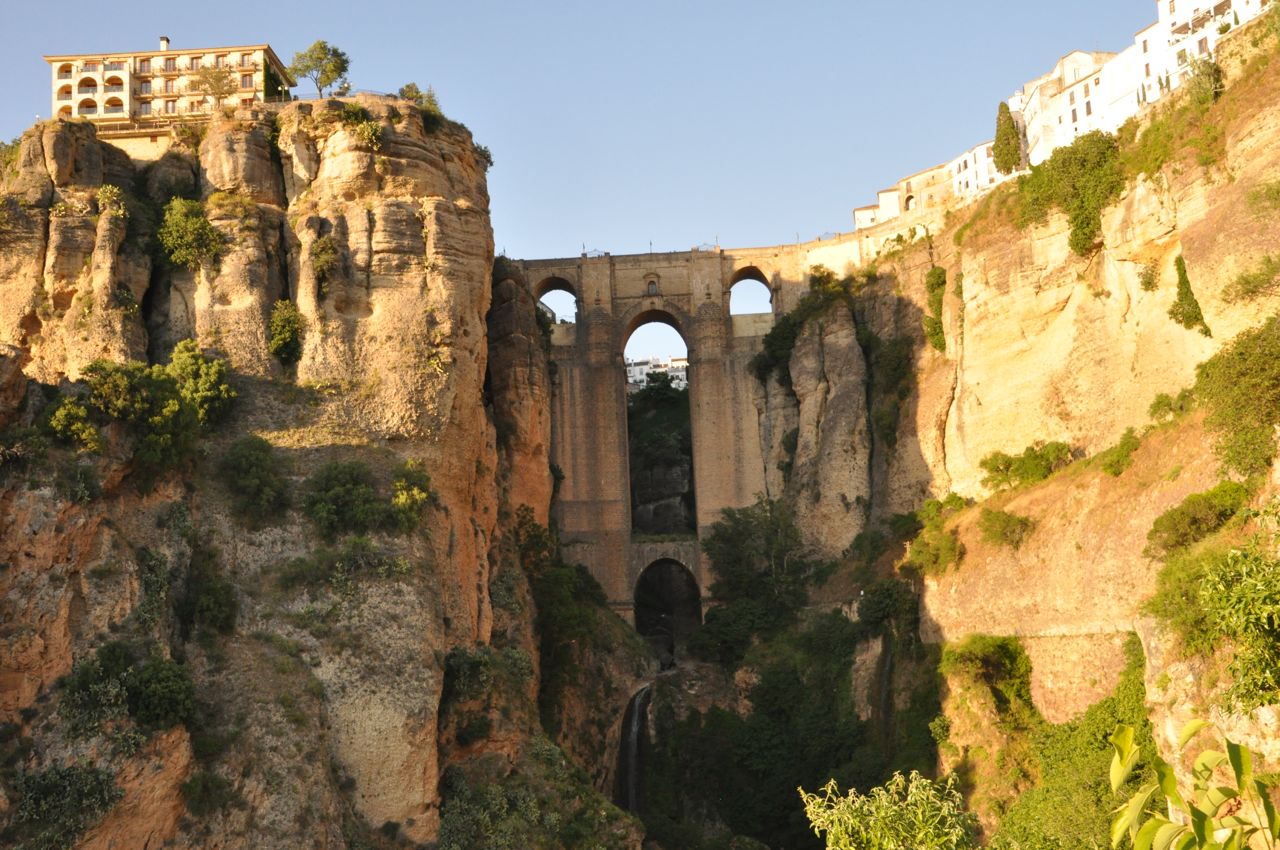
Below are some views of Ronda.  It was quite a fortress (you can see there would be some difficulties in access), and it’s very clear why it took awhile to fall to the Reconquista.  It’s a beautiful city of white-washed homes and narrow streets, with frequent overviews of the idyllic villas and farms.

Rhoda4 Rhoda3 Rhoda1 Bridge

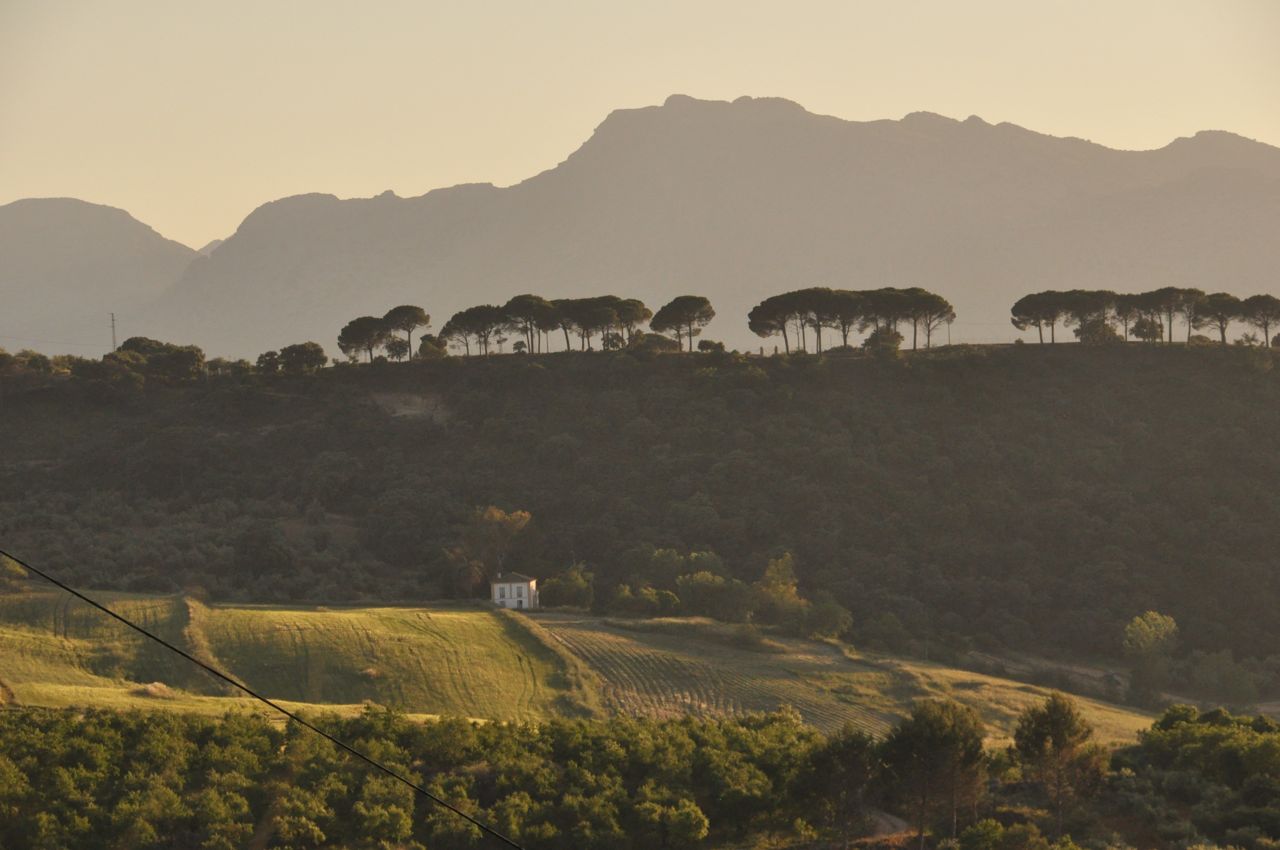
The views of the surrounding area are spectacular:

Rhoda6 Rhoda5 Rhoda2  City1

The city itself is quite attractive, as shown below.

DSC_0084 RhondaCity

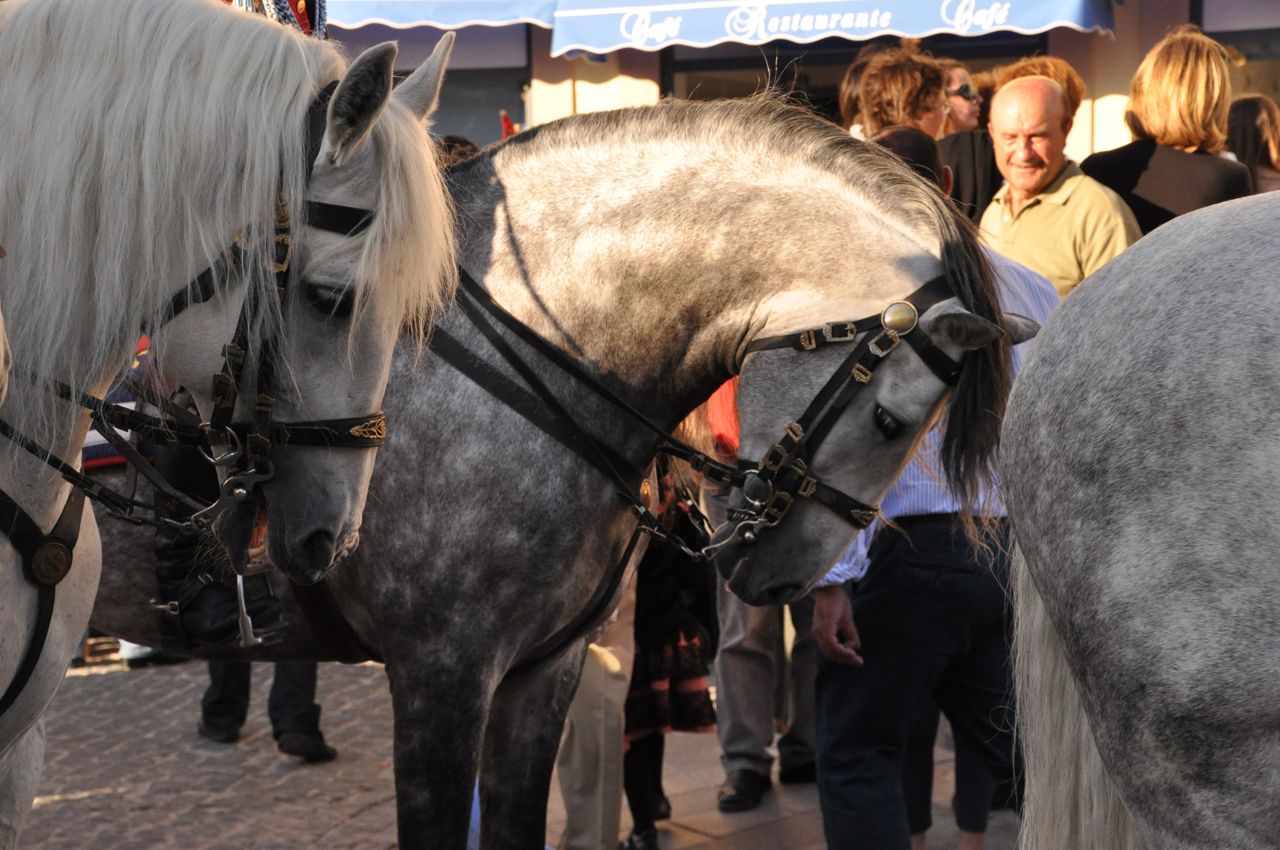
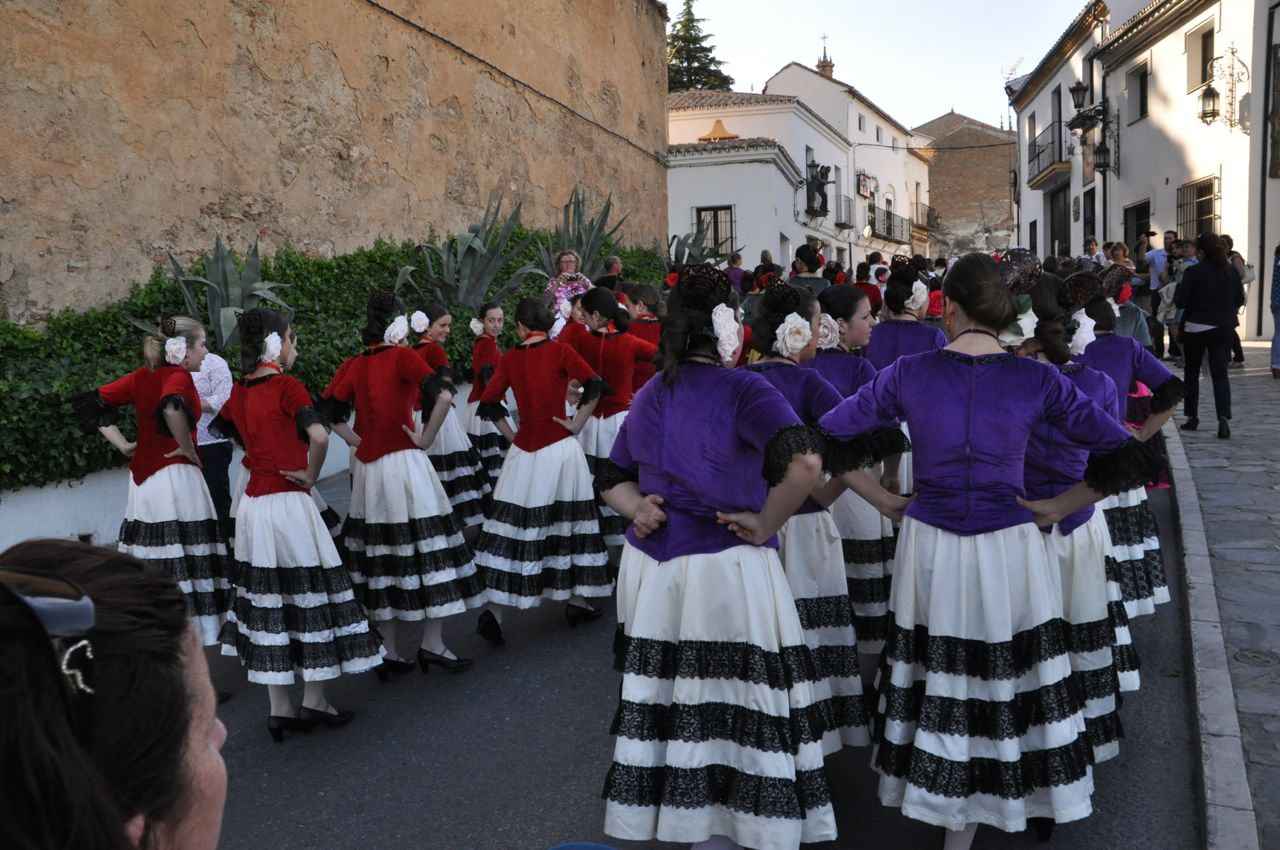
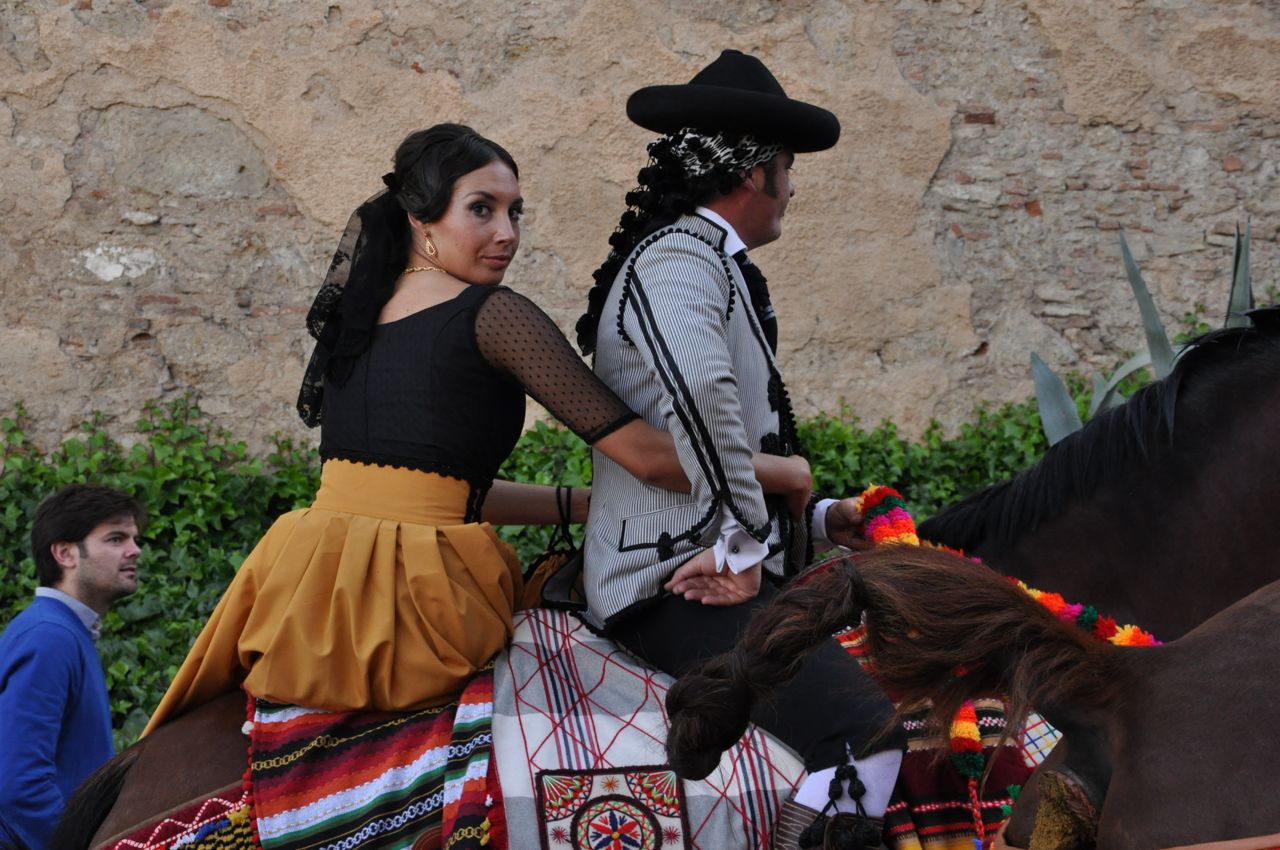
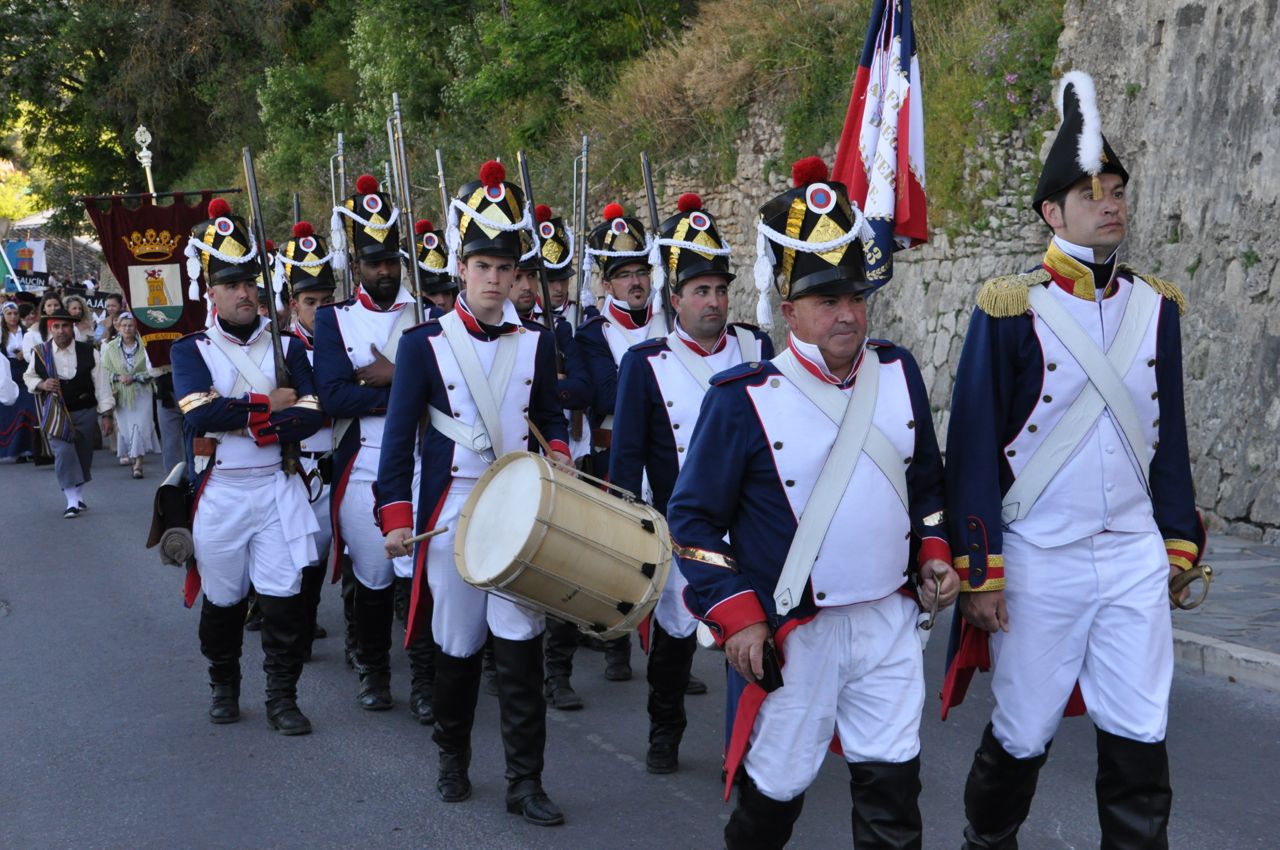
We managed to luck into a local festival with the surrounding small towns:

RondaFest1 DSC_0250

RondaFest2 RondaFest4 RondaFest5 RondaFest6 RondaFest3

Parade Parade4

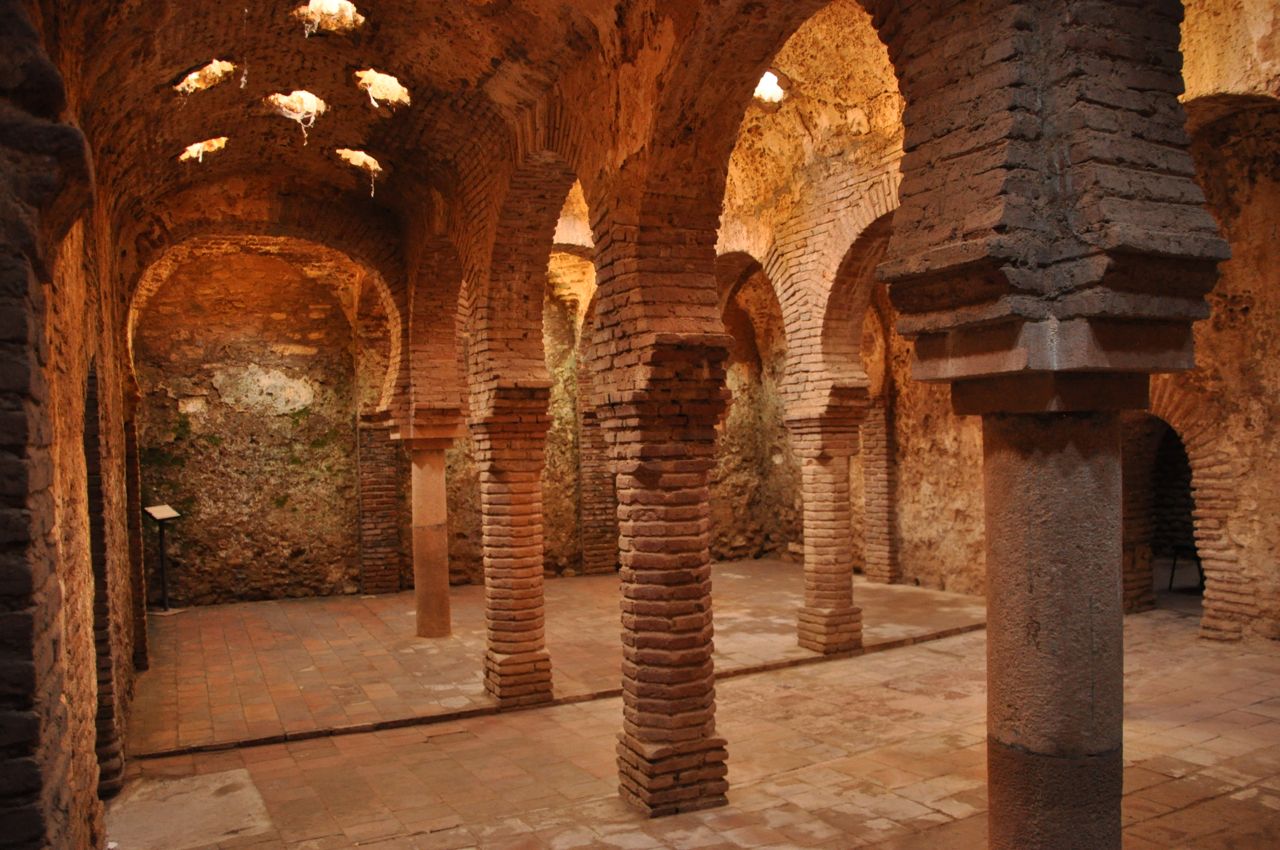
There are ancient (1100’s) ruins of Moorish baths (similar to Roman baths a thousand years earlier) just outside the old city wall; based on the Koran, one would bathe before entering the city.  There’s a changing room and latrine outside, then a cold room, warm room and hot room.  The temperature was based on distance from the boiler, the heat coming from ducts under the flooring.  You had to wear wooden shoes to keep the feeties from getting too hot.  Water was thrown on the floor to get steam.  Below is the changing room (minus the barrel-vault ceiling) and the large  warm room.

Bath  DSC_0035

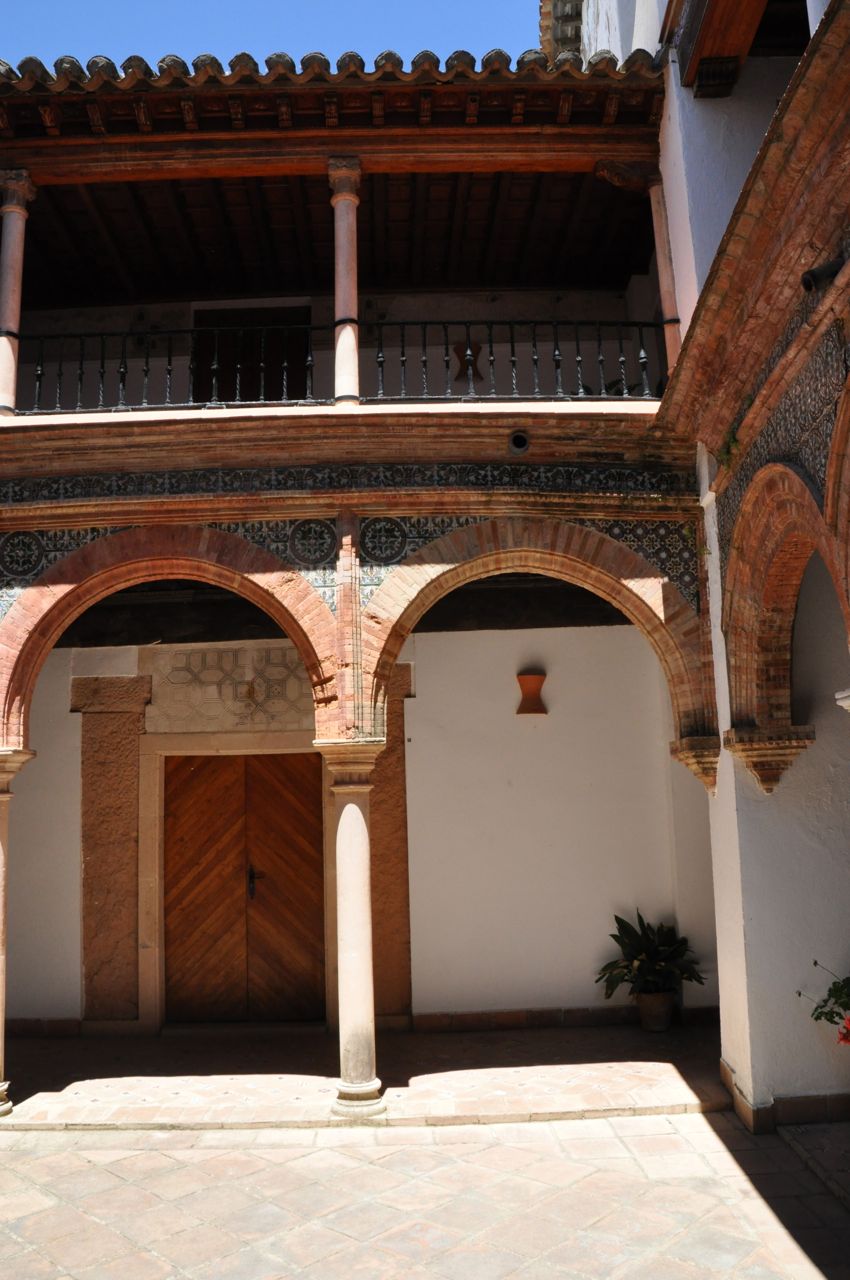
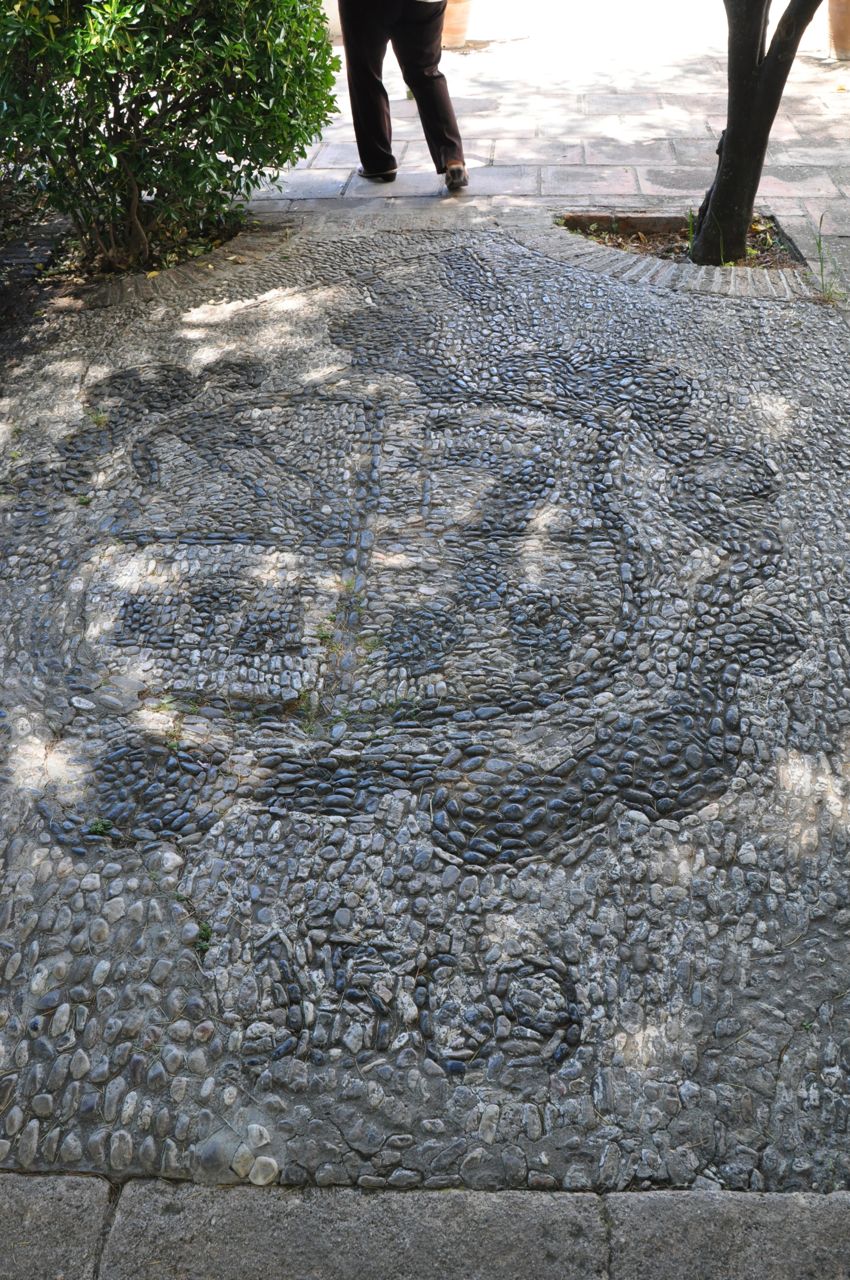
Below is a Moorish palace (Mondragon) that was built in the 1300’s (and restored in the 1500’s – the rock patio floor says 1509).

Mondragon1Mondragon2Mondragon4Mondragon3That's1509!